

Executive Summary
Accessible transport scheduling platform built with WordPress reduced admin time by 60%, improved ride booking efficiency, and ensured WCAG 2.1 AA compliance.
The client, an on-demand transport provider serving individuals with disabilities and older adults, was facing operational chaos. One notable incident saw three overlapping bookings within ten minutes, forcing staff to scramble with phone calls and handwritten changes. As a result, they urgently needed a digital transport scheduling platform that could coordinate rides reliably across multiple organisations.
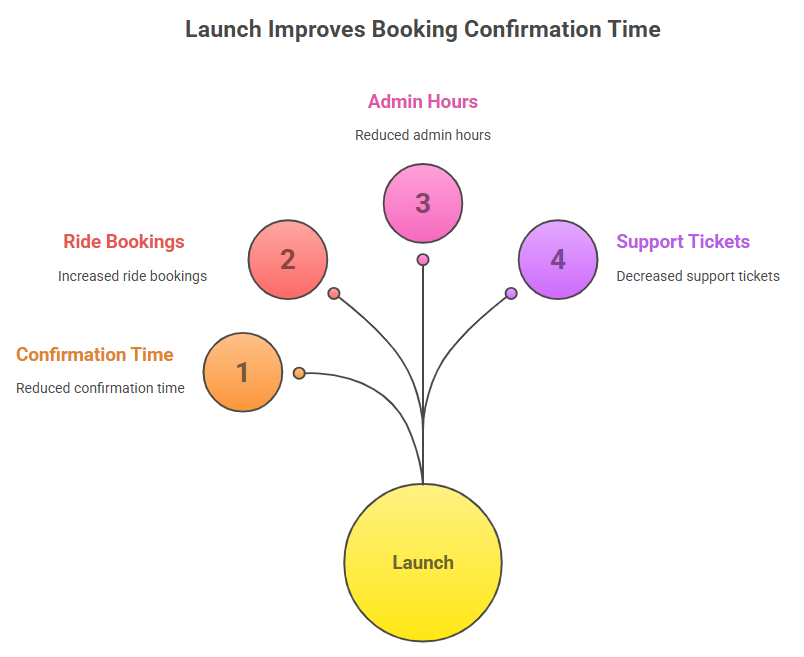
We developed a custom WordPress-based web application that featured an intuitive booking dashboard, full WCAG 2.1 AA accessibility compliance, and stringent security measures. As a result, within just three months of deployment, partner organisations experienced a 40 percent reduction in scheduling time, a 30 percent increase in monthly bookings, and a 60 percent decrease in administrative workload. Ultimately, this enabled more users to access transport services with confidence and independence.
Challenges Before the Platform
Before the solution, coordinators manually managed over 100 weekly rides. Every Friday, they spent four hours reconciling trips. Drivers couldn’t view trip updates while on the move. One staff member said, “I had to switch between emails, phone calls and spreadsheets—and I still missed changes.” At the same time, client data remained vulnerable, stored in unsecured spreadsheets.
Choosing the Right Transport Solution
The client chose us due to our proven experience in delivering WCAG-compliant digital platforms for social care providers. In addition, our sprint-based development model offered bi-weekly stakeholder feedback, which kept everyone aligned throughout. Our SME-focused approach also meant they could benefit from competitive pricing without sacrificing quality. Moreover, our use of a dedicated project portal and weekly demos ensured consistent transparency and communication.
Project Overview
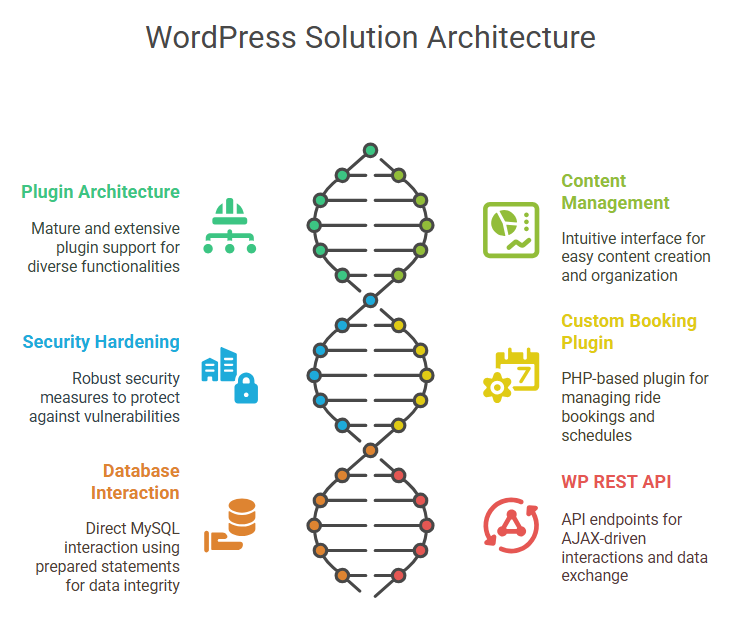
We used WordPress with PHP and MySQL, connected via the WP REST API. The project ran from May to August 2020. The budget was designed to be SME-friendly, while also supporting modern features and scalability.
| Aspect | Details |
| Service | Web application |
| Technology | WordPress (PHP, MySQL), WP REST API |
| Period | May 2020 to August 2020 |
| Budget | Designed to be cost-effective for SMEs while supporting scalability and modern operational needs |
Measurable Impact After Launch
WordPress offered a mature plugin ecosystem and solid security, allowing us to focus on custom functions. We developed a PHP plugin to create a “Ride Booking” content type, expose real-time scheduling endpoints, and store ride data directly in WordPress tables.
The system integrated with live-chat, consent tools, and firewall services. We tested across devices to ensure responsiveness and WCAG 2.1 AA compliance.
Key Features of the Platform
Our transport scheduling platform included a visual dashboard for drag-and-drop scheduling, real-time capacity indicators, and role-based access for staff, drivers, and coordinators. It provided automated notifications for ride updates, compliance with GDPR through consent banners and logs, and live support via an embedded chat widget. Security was enhanced through SSL enforcement and routine vulnerability scans.
Project Outcomes
Booking-to-confirmation time dropped from 120 minutes to 72. Monthly rides increased from 1,200 to 1,560. Admin hours fell by 60 percent, saving over 80 hours per month. Support tickets were halved after live chat was introduced. The platform achieved 99.9 percent uptime and passed a full accessibility audit.
Challenges Before the Platform
Accessibility features like ARIA markup and high-contrast assets slowed performance. We resolved this using lazy-loading and image optimisation. Our team created middleware to link scheduling with security tools. To migrate data from spreadsheets, we wrote custom scripts to clean and import records. We also ran extra user testing to align the needs of frontline staff with admin workflows.
Lessons From the Platform Build
Embedding accessibility standards from the outset prevented expensive rework later in the project. Furthermore, adopting a modular architecture allowed us to roll out new features more easily. Regular stakeholder demos ensured continuous alignment and revealed requirements early that might otherwise have been missed. Finally, by introducing automated testing for responsive and accessibility features, we significantly accelerated the QA process while improving quality control.
Future of the Transport Scheduling Platform
We plan to launch native mobile apps for iOS and Android. These will allow offline ride confirmations and GPS driver tracking. We also aim to add AI-powered route optimisation to reduce dead mileage by 20 percent. A business intelligence dashboard and multi-language support are also in development.
Conclusion: Power of Accessible Scheduling
By delivering an inclusive, secure, and scalable transport scheduling platform, our team helped the client significantly improve coordination, efficiency, and service reach. This project illustrates how purpose-driven design, stakeholder collaboration, and accessibility can empower vulnerable communities and drive meaningful digital transformation within the social care sector.
Ready to simplify your transport scheduling? Contact us now to explore how we can build an accessible, secure, and efficient solution tailored to your needs.
WRITTEN BY
July 1, 2025, Product Development Team
Top Categories
- Software Development ................... 7
- AI in Business ................... 5
- Digital Transformation ................... 5
- Technology ................... 3
- Uncategorized ................... 3